How Confidence Actually Grows
Why Struggle, Mistakes, and Independence Matter
We often talk about wanting children to be confident.
We want them to walk into new spaces without fear. To speak up. To try new things. To believe in themselves. To stand tall when something feels difficult.
And dance is often described as an activity that “builds confidence.”
We believe it does.
But perhaps not in the way people sometimes imagine.
Confidence isn't something a child suddenly receives after stepping onto a stage, learning a difficult skill, or being told, “You're amazing.”
Confidence grows when children have repeated experiences that teach them: I can do hard things. I can learn. I can make mistakes. I can try again. And I can trust myself.
That kind of confidence takes time.
And at Dance AS, we believe the environment in which it grows matters.
Confidence Doesn't Always Look Confident
Sometimes we expect confidence to look like the child who eagerly raises their hand, performs without hesitation, or walks into the studio ready to take center stage.
But confidence can be much quieter than that.
It might be the dancer who used to stand in the back choosing a spot a little closer to the front.
The child who finally offers an idea when the teacher asks the class to create movement.
The dancer who makes a mistake and keeps going instead of looking around to see who noticed.
The student who asks a question.
The little one who walks into class independently for the first time.
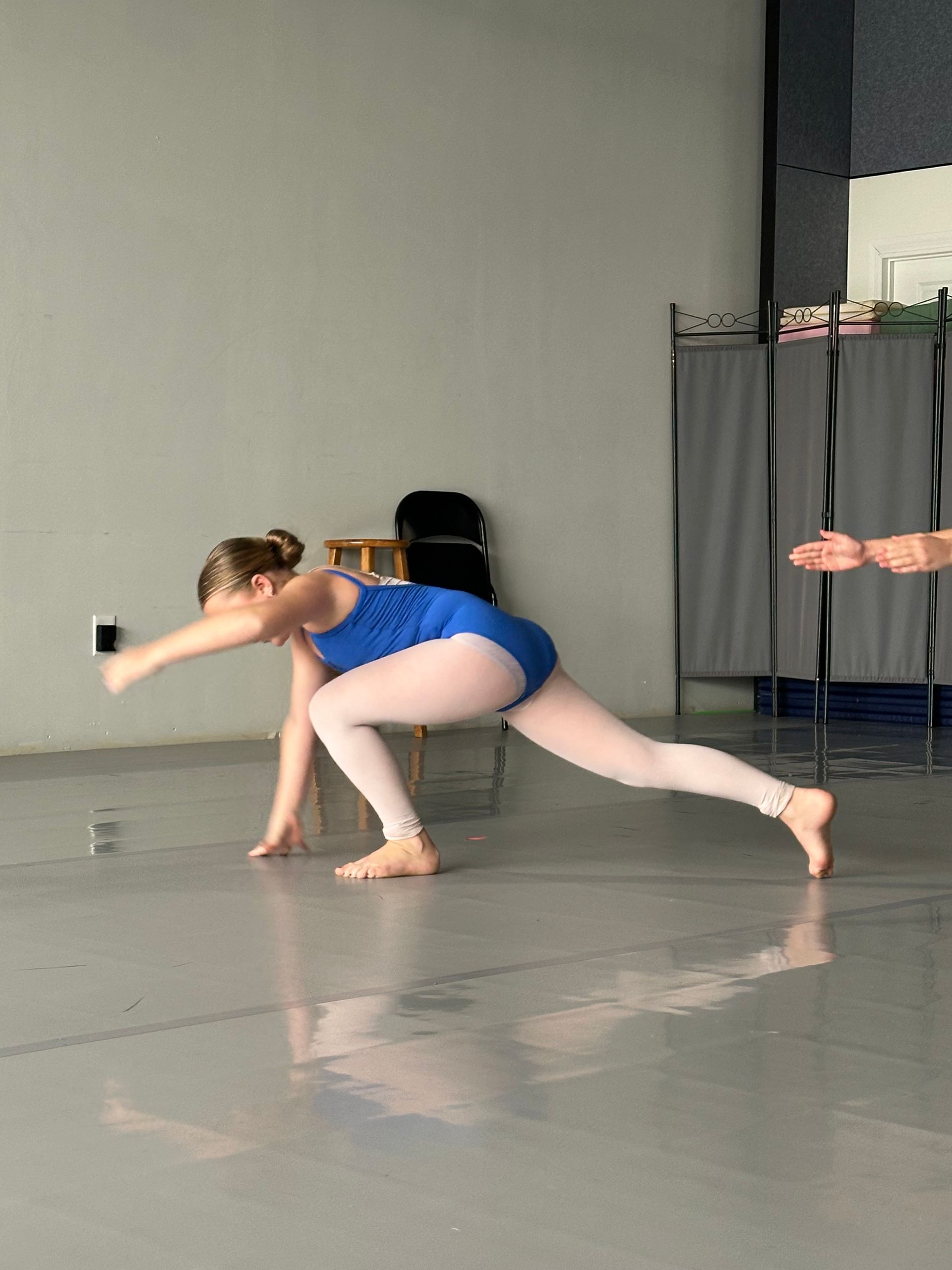
The dancer who tries something difficult even though they aren't sure they'll get it right.
Those moments may seem small.
But they're often where confidence is actually being built.
Confidence Grows Through Doing
We can tell a child, “Believe in yourself.”
But children also need experiences that give them a reason to believe.
Every time a dancer works on something challenging, they are gathering evidence about themselves.
I didn't know how to do this before.
I practiced.
I listened.
I tried again.
I'm getting stronger.
I figured something out.
That process matters.
A child doesn't need to be the best dancer in the room to become confident. They need opportunities to experience their own growth.
This is one reason we value consistency so deeply at Dance AS. When dancers return week after week, they begin to see what time, effort, correction, and practice can produce.
Something that once felt unfamiliar becomes familiar.
Something that once felt impossible becomes possible.
And slowly, a dancer begins to think:
Maybe I can do hard things.
Mistakes Have an Important Role
If we want confident children, we have to give them room to get things wrong.
Dance provides plenty of opportunities.
A turn doesn't work.
The choreography disappears from memory.
They move in the wrong direction.
They lose their balance.
An improvisation doesn't feel the way they imagined.
They receive a correction and have to try again.
Of course, our job as teachers is to help dancers improve. Technique matters. Details matter. Discipline matters.
But perfection cannot be the price of belonging.
A dancer needs to know that a mistake doesn't make them less worthy of being in the room.
When children experience correction in an environment that is both challenging and supportive, they begin to separate “I made a mistake” from “I am a failure.”
That's a powerful distinction.
Eventually, mistakes become less frightening.
And when children are less afraid of being wrong, they become more willing to explore what they might be capable of.
“I Love You Enough to Let You Fail”
Last week, I told a class, “I love you enough to let you fail.”
They were struggling to remember a combination. I could have continued calling out every step and helped them get through it.
But at that point in their training, they needed something different from me.
They needed the opportunity to remember it for themselves.
And for a little while, that meant allowing them to struggle.
As teachers and parents, it can be tempting to step in when we see a child having difficulty. We want to help. We want them to succeed. We want to spare them the frustration of getting something wrong.
But sometimes, stepping in too quickly takes away the very experience that builds confidence.
Those dancers needed the opportunity to discover:
I can think through this.
I can make a mistake and recover.
I can pay attention to what comes next.
I am responsible for knowing my part.
I don't need someone else to give me the answer every time.
That doesn't mean we leave children alone in their struggle. There is a difference between allowing a child to struggle productively and asking them to figure everything out without support.
Our job is to know when to guide, when to correct, when to encourage—and when to give a dancer enough space to discover that they can do something for themselves.
That is one of the ways confidence actually grows.
Not because an adult removed the possibility of failure, but because a child experienced difficulty and discovered:
I can handle this.
Sometimes encouragement sounds like, “You've got this.”
Sometimes it sounds like, “Let's try again.”
Sometimes it's a correction.
And sometimes love looks like resisting the urge to rescue a child from a challenge they are ready to work through.
Because we aren't only preparing dancers to remember today's combination.
We're helping young people develop the confidence, responsibility, and resilience to think for themselves.
Confidence Grows When Children Have a Voice
At Dance AS, we don't only want dancers who can reproduce movement.
We want to develop artists who can make choices.
That means creating opportunities for dancers to explore, improvise, interpret music, contribute ideas, ask questions,
and discover how movement can communicate something of their own.
For a young dancer, being asked, “What do you think?” can be incredibly powerful.
Their answer doesn't have to match anyone else's.
There may not even be one correct answer.
They are learning that their ideas have value.
That their perspective matters.
That their body can communicate.
That they have something worth contributing.
This is part of what we mean when we talk about helping dancers discover their voice through movement.
Confidence Grows Through Belonging
Children are more willing to take healthy risks when they feel safe enough to take them.
Before a dancer is willing to step forward, create something new, accept a correction, or perform in front of others, they need to know something important:
There is room for me here.
That's why Dance AS Family is more than a phrase.
We want our dancers to be known.
We want teachers to notice when something changes.
We want classmates to learn how to encourage one another.
We want dancers to experience both individual responsibility and community.
Because when a child knows they don't have to earn their belonging by being perfect, they have more freedom to learn.
And learning requires vulnerability.
The Stage Doesn't Create Confidence Overnight
Performing can absolutely strengthen confidence.
Our Winter Showcase, Spring Concert, Creative Concert, and other performance opportunities give dancers meaningful experiences of preparing, contributing, being seen, and sharing their artistry.
But the confidence we see onstage doesn't begin when the performance starts.
It has been growing in the studio.
It grew during the class when the dancer didn't give up.
During the rehearsal when they couldn't remember the choreography and kept working.
During the moment they accepted a correction.
During the day they tried something they had been avoiding.
During the hundreds of seemingly ordinary moments when they learned that they could trust themselves a little more.
The performance gives them an opportunity to see what all of those small moments have built.
Becoming Confident Creators of Their Own Story
Our mission at Dance AS is to help young dancers discover their voice through movement and grow into confident
creators of their own story.
The word grow matters.
Confidence isn't something we can hand to a child.
But we can create the conditions for it.
We can know them.
Challenge them.
Encourage them.
Teach them.
Listen to them.
Give them opportunities to make choices.
Allow them to struggle without abandoning them in the struggle.
Celebrate their progress without making perfection the goal.
And then, little by little, they begin to discover something for themselves:
I can learn.
I can contribute.
I can recover.
I can create.
I can try again.
I belong here.
My voice matters.
That's how confidence actually grows.
Not all at once.
Not because someone told them to be confident.
But through hundreds of small experiences that teach a child:
I can trust who I am becoming.
Dance AS Expression. Dance AS Growth. Dance AS Family.
Dance AS Dance Academy
Helping young dancers discover their voice through movement and grow into confident creators of their own story.